Xander Hansen · 11 September 2026
Strategies for Maintaining Content Freshness in Independent Knowledge Bases Without Frequent Overhauls
Independent knowledge bases often rely on structured approaches that allow information to evolve through targeted additions rather than complete replacements, and researchers at institutions like the University of Toronto have documented how modular frameworks support this process across various digital archives. Experts observe that these systems incorporate version tracking tools alongside scheduled audits, which together help sustain relevance while minimizing resource demands, whereas data from government digital initiatives in Australia shows that organizations using such methods report sustained user engagement metrics over multi-year periods.
Modular Content Architecture as a Core Approach
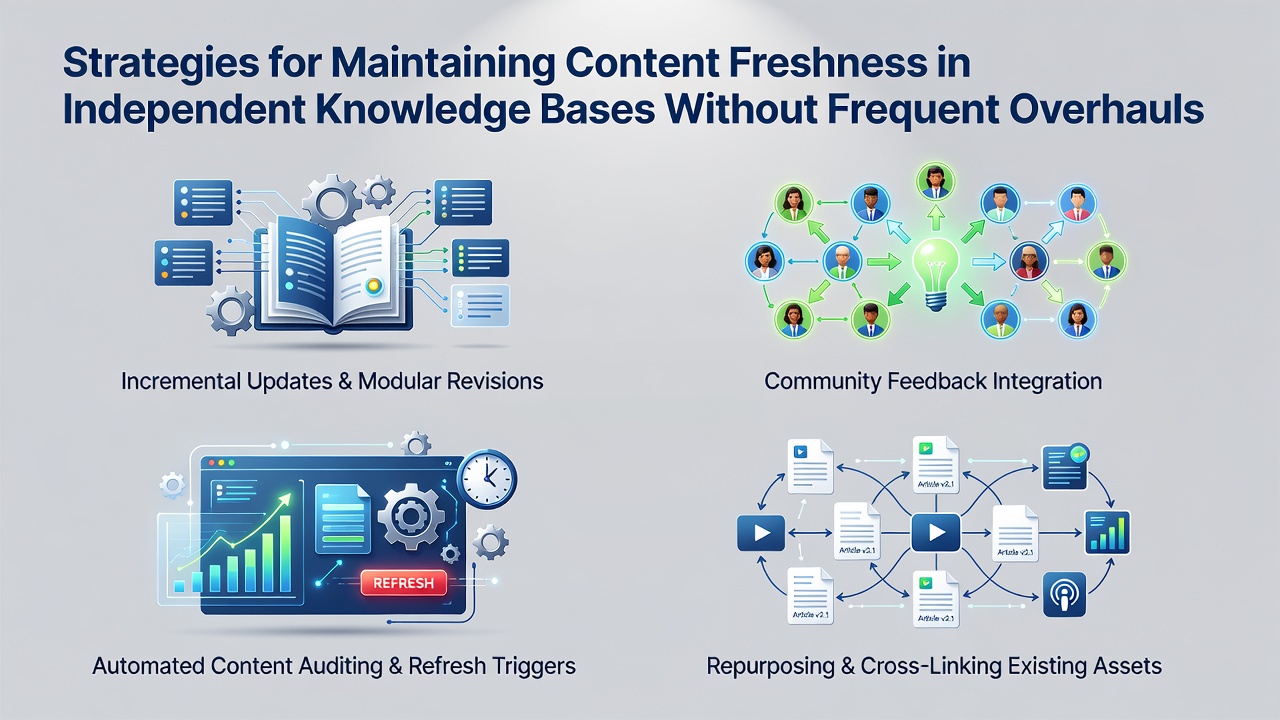
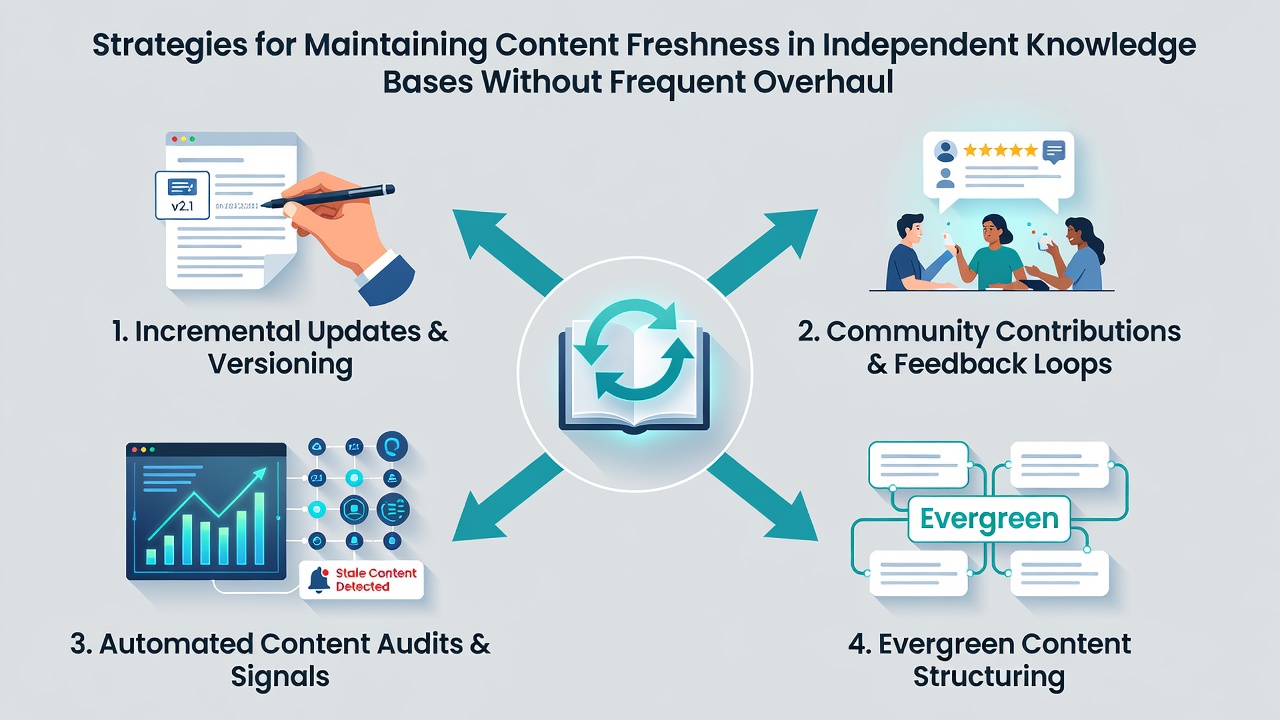
Knowledge bases benefit when content divides into discrete sections that permit isolated revisions, and studies from the National Institute of Standards and Technology indicate that this segmentation reduces the scope of updates by allowing teams to focus on specific modules without disturbing surrounding material. Observers note that contributors can insert new data points or refine existing entries through these isolated units, which in turn maintains overall coherence while avoiding the disruption associated with full-site revisions. This method draws on principles of incremental development, where each component carries its own metadata for tracking currency and source attribution.
Automated Monitoring and Trigger-Based Reviews
Systems equipped with analytics software detect shifts in external references or user query patterns, prompting focused reviews only when thresholds are crossed rather than on fixed calendars. Researchers have found that such triggers, drawn from log analysis and external data feeds, enable base maintainers to address obsolescence efficiently, and figures from Canadian federal digital preservation programs reveal that trigger-driven protocols cut review workloads by significant margins compared to routine overhauls. Those who implement these tools often pair them with notification protocols that route alerts to relevant subject experts, ensuring timely yet contained interventions.
Community Contribution Frameworks
Independent bases frequently incorporate vetted user submissions that introduce fresh perspectives and recent developments, and academic analyses from European research consortia confirm that moderated contribution pipelines preserve quality standards while expanding coverage. Contributors submit additions through structured forms that include citation requirements, after which editorial layers verify alignment with existing structure before integration. This distributed model distributes the freshness workload across a wider participant base, and evidence suggests it sustains depth in specialized topics where central teams alone cannot monitor every emerging source.
Metadata and Cross-Referencing Enhancements
Regular refinement of tags, timestamps, and relational links keeps navigation pathways current even when core text remains stable, while data from OECD digital economy reports highlights how enriched metadata improves discoverability and signals ongoing maintenance to visitors. Maintainers update these elements through batch processes that scan for broken connections or outdated classifications, thereby refreshing the user experience without textual overhauls. Such practices also support long-term archival integrity by documenting evolution paths for each entry.
Scheduled Micro-Updates Tied to External Events
Aligning small-scale revisions with verifiable external milestones, such as regulatory changes or research publications, provides natural refresh points that feel organic rather than arbitrary. Analysts tracking independent sites note that this event-driven cadence prevents stagnation in fast-moving fields, and September 2026 updates to international data standards offer one such anchor point for bases covering technical domains. Maintainers can queue related adjustments in advance, integrating them seamlessly into existing modules.
Conclusion
Independent knowledge bases achieve sustained freshness through layered strategies that emphasize modularity, targeted monitoring, distributed input, metadata upkeep, and event-aligned timing, and combined application of these elements supports ongoing utility without repeated large-scale interventions. Organizations adopting these patterns continue to demonstrate measurable retention of both content accuracy and audience reach over extended intervals.